

Total cholesterol
The total amount of cholesterol carried in your blood by different lipoprotein particles.
If you have high cholesterol, elevated triglycerides, or a family history of early heart disease, a personalized plan can help you manage your cardiovascular health. In North Vancouver, Dr. Ramesh Saeedi, MD, FRCPC, provides specialist dyslipidemia assessment and management, including guidance on nutrition and lifestyle, medication prescriptions when appropriate, and follow-up.
BC MSP covers eligible specialist consultations.
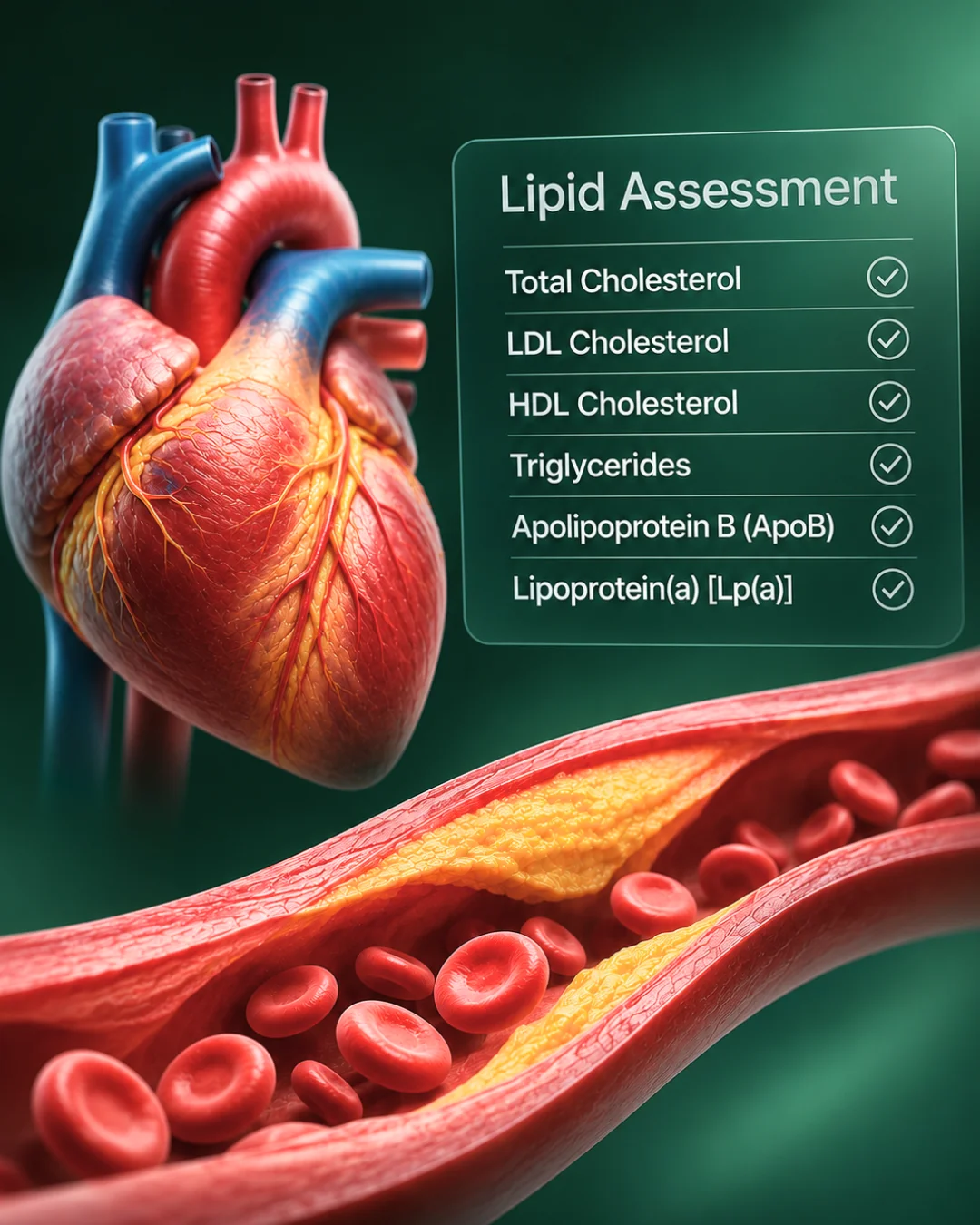

Understanding your health
Dyslipidemia means that levels of fats in your blood are outside a healthy range. Common examples include high LDL cholesterol and elevated triglycerides. High cholesterol often has no noticeable symptoms, so a blood test is important for identifying it and understanding your heart health.
This service is for people seeking specialist assessment and management of abnormal lipid results, including those with a family history of high cholesterol or early heart disease. It may also help when cholesterol remains difficult to manage, treatment causes concerns, or you would like to understand your options for ongoing care. Discuss whether a referral is appropriate with your healthcare provider.
Over time, elevated LDL cholesterol can contribute to plaque building up in artery walls. This can narrow arteries and increase the risk of heart attack or stroke. Blood pressure, diabetes, smoking, family history, and other factors also contribute to cardiovascular risk.
A lipid result is only one part of the picture. Looking at your results alongside your overall health helps your clinician discuss the steps that may reduce your risk over time.
Familial hypercholesterolemia is an inherited condition that can cause very high LDL cholesterol from an early age. Tell your clinician if you or a close relative have had very high cholesterol or heart disease at a young age. They can discuss assessment and whether family members may benefit from testing.
Learn more from Heart & StrokeCholesterol and triglycerides are fats in your blood. Lipoproteins are particles that carry these fats, while apolipoproteins are proteins found on those particles. Your clinician considers these results alongside your health and family history.
The total amount of cholesterol carried in your blood by different lipoprotein particles.
Often called “bad” cholesterol. High levels can contribute to plaque buildup in arteries.
Often called “good” cholesterol. It helps carry cholesterol away from the bloodstream.
A type of fat in the blood. Elevated levels are considered alongside other results and health factors.
Total cholesterol minus HDL cholesterol. It reflects cholesterol carried by particles that can contribute to artery plaque.
A cholesterol-carrying particle whose level is largely inherited. Elevated Lp(a) can add to cardiovascular risk.
A protein on particles that can contribute to artery plaque. Its level helps estimate the number of these particles in the blood.
The main protein in HDL particles. It helps HDL transport cholesterol and may be measured in selected circumstances.
A standard lipid profile usually includes total cholesterol, LDL cholesterol, HDL cholesterol, non-HDL cholesterol, and triglycerides. Lp(a), ApoB, and ApoA-I are additional tests. Your clinician can explain which tests are appropriate for you.
Dr. Ramesh Saeedi brings her experience in medical biochemistry to the assessment and management of abnormal cholesterol and triglycerides. Together, you can explore what may be influencing your results, discuss treatment options, and develop a plan suited to your cardiovascular risk, health needs, and preferences.
Your assessment may include a review of previous lipid tests, family history, medications, and other health conditions that can affect lipid levels. Sharing earlier results and any treatments you have tried can help put changes in your numbers into context.
Dr. Saeedi may order blood tests or arrange referrals to help clarify your cardiovascular risk and guide your care. Blood tests are not performed at Parsa Wellness Clinic; they are completed at an external laboratory. Depending on your history and results, further investigations may include:
Your clinician will discuss which investigations may be appropriate, where they can be performed, and whether referral to another specialist could help. Test availability and coverage vary.
Dr. Saeedi can discuss your cardiovascular risk, treatment options, and follow-up with you, including the potential benefits and considerations of each option. Recommendations can also be shared with your referring clinician to support ongoing care.
Review your cholesterol and triglyceride results, including previous tests when available, and discuss what the numbers mean in the context of your health.
Discuss your medical and family history, current medications, and factors such as blood pressure and diabetes that can affect cardiovascular risk.
Discuss a plan suited to your needs, which may include lifestyle changes, medication prescriptions, further testing, or follow-up with your healthcare team.
Your care plan may include nutrition and physical activity changes, support for other cardiovascular risk factors, and medication when appropriate. Your clinician can discuss practical changes that fit your circumstances, such as adjusting dietary fats and fibre, finding suitable ways to be active, and addressing smoking if relevant.
When appropriate, Dr. Saeedi can prescribe medication, such as a statin, to help manage lipid levels. She can explain the expected benefits, possible side effects, and how medication fits alongside lifestyle changes. Treatment is tailored to your results, medical history, overall risk, and preferences.
Follow-up may include reviewing repeat blood work completed at an external laboratory and discussing how your plan is working. If you start medication, your clinician can also review your response and any side effects or concerns. The timing and next steps depend on your circumstances and care plan.
Read the BC cardiovascular health guidelineBC MSP covers eligible specialist consultations. Call our North Vancouver clinic to confirm referral requirements and where your referring clinician should send the referral.
BC MSP medical benefits
MD, FRCPC · Medical Biochemist
Medical Biochemist, (MD, FRCPC)
Dr. Ramesh Saeedi is a Medical Biochemist specializing in dyslipidemia and metabolic disorders. She provides evidence-based care to manage abnormal cholesterol, triglycerides, and related metabolic imbalances. At Parsa Wellness Clinic, Dr. Saeedi collaborates with the multidisciplinary team to address inflammation and lipid health. Her expertise supports pain management, joint health, and long-term wellness.
Learn about cholesterol, follow-up, coverage, and preparing for your appointment.
No. Blood tests are not performed at Parsa Wellness Clinic. Dr. Saeedi reviews your existing results during your consultation and can discuss any further testing that may be appropriate at an external laboratory.
Explore naturopathic care for broader cardiometabolic health, nutrition, and lifestyle support.
Our North Vancouver team can help you confirm what you need to see Dr. Saeedi.
Call (604) 770-4816